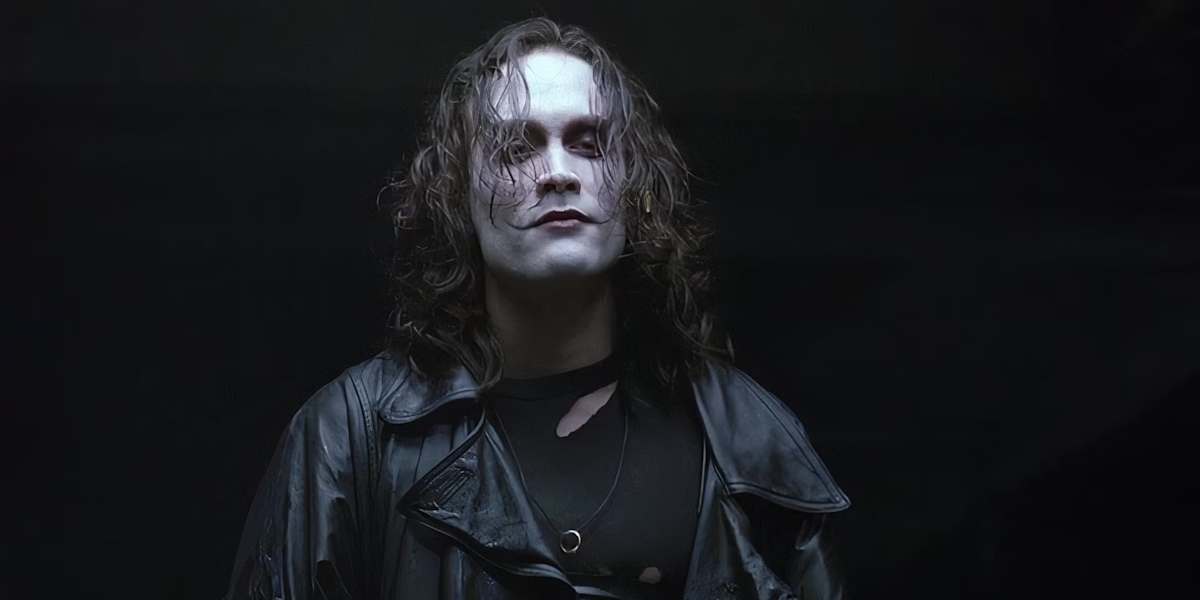
One of my favorite Halloween movies of all time is the 1994 movie The Crow starring Brandon Lee (who unfortunately died while on set for the movie). In the movie, which itself is based on a comic book series of the same name, is about a man who gets murdered with his fiancee on October 30th, also known in Detroit as "Devil's Night". Devil's Night was a real annual event that happened from the late 1960s up until the 1990s, and often the day was marked by an uptick in crime the night before Halloween. Almost ironic that my 30th post is about October 30th on October 30th, isn't it?
Back to The Crow, the protagonist of the movie rises from the dead a year after his death and has since become immortal. Because the men who murdered him and his fiancee are still alive and causing problems in Detroit, he goes on a spree of vengeance to kill them in amazing but deserved ways. The creators of the movie were exceptionally creative with its narrative, darkness, and how it adapted the comic book material into a major motion picture. Despite the protagonist's immortality, he is a relatable character. Not because we're immortal, we're not (at least I'm not), but because anyone who was murdered in cold blood or was almost murdered in cold blood would most certainly go out with a vengeance against the criminal who perpetrated the act. After all, it's why Fallout: New Vegas's entire beginning first half exists as well; chasing the man who tried to kill the character that you play as in the game.
Devil's Night reminds us that vengeance is not always a theme that lacks morality. Often, vengeance in such a high degree is justified, and we can make the argument as such; which is why we love these pieces of media so much. Reprisals are a part of human nature, as is spite. In a way, it's quite amusing that in the Bible that the devil is meant to be an ultimate punisher for those who disobey God, and the creators of the movie turned the meaning of a devil's night on its head. Indeed, it was—and for all the right reasons.
One of the most fascinating pieces of media is a revenge-based plot. I.E. the story starts, the protagonist gets wronged by the antagonist in some way, and they go on to wreak havoc upon the antagonist and those who support them. I've found them to be so compelling that I modeled my second novel on a revenge plot. It's evidence that hatred can drive us just as much as love can, and in a sense, a revenge story can be even stronger if one of the loved ones of the protagonist is also harmed by the antagonist. In fact, if we look back to The Crow, him getting killed was only the tip of the iceberg. When his fiancee was murdered with him, we could make a full argument that this was the event that'd determine the entire story. He loved his future wife so much that to kill those who killed her meant everything to the remainder of his soul that had yet to leave the mortal coil.
They place media like this under the genre label of 'gothic', which has interesting implications. While I understand that the story focuses a lot on humanity's evil, I think a lot of it focuses on the good people who are willing to step up when the worst could happen. When the worst happens and the right people's answer to protect those we love is it just as evil? What's the justification behind perpetual, needless violence and bloodshed? Once again, many themes are directly related to humanity, our arrogance, and our scar. At the end of the day, even the best of us are not absolved of sin, but that does not mean we are evil. One could argue the philosophy of law reflects this, as if someone tries to kill you and you kill them out of self defense, it is legal. All things considered, if we just take the bare-bones that "it's legal to kill only under this circumstance", it's still immensely interesting that it's almost universally agreed upon that it's a justified form of violence. Whether it is or isn't is a manner of philosophical interpretation.
Until we meet again,
Happy Halloween!
Dustin