Locations are beyond the geography and maps they inhabit. Anyone can look at a map and go, "Alright, Vaduz is the capital of Liechtenstein, so what?", and that's because maps are supplementary information. Saying "x location and y location", like to many people, means nothing to the readers unless they're looking for encyclopedic knowledge. Memorable locations are not in the names themselves, but rather what characteristics or history the location has. These are questions I often have to ask myself when worldbuilding.
It's easy to make superficial descriptions that can ruin a scene, just as much as it's easy to overinundate the reader with explanations that don't further the story or character development. So, how do we take my earlier example and say something interesting that makes it a memorable location? Well, if I told you that the city has beautiful mountains that tower over it within the Alps, with green rolling hills and Germanic architecture, that already paints a much better picture than a political map can. Naturally, you can get more detailed, and you can even use examples; I.E. Vaduz is like Vail in Colorado because both locations have ski resorts and similar geography! There are many more differences, of course, but if you're attempting to generalize and visualize, concepts work just fine.
Another example of what makes a memorable location might be its history, in the realm of what you can't see but what you can learn about its past. What if I told you that the army of Lichtenstein in 1866, which numbered 80 soldiers, came home with 81 during the Austro-Prussian War? Few armies in the world had no casualties in fighting, and fewer made friends along the way. Even for these minor countries and locations, they have their own personality, their uniqueness. No two locations on Earth are truly alike, which adds another layer of love for the planet, doesn't it?
While my debut novel takes place on Earth, I've had to create locations that don't exist or modify existing locations. This can be as tame as renaming a building, adjusting the architecture, or as extreme as adding an entirely new system of infrastructure. For my writers reading this, always remember that no writing advice will help you unless you understand that it's your story that you're writing, so write what feels right to you. Judge later, always. Anyway, there are plenty of examples of real locations I turned to fit the world I wanted to make. Beyond real locations, I had to start from scratch in particular areas and engage in raw worldbuilding for the fantasy element of my book. In doing so, geography is more than just slapping mountains on a map like flex tape; it's about understanding the eons of history it took to create the geography of the location, how it generated the resources, and the architecture, as every minute detail here is creative. You can do literally anything, especially if it's a fantasy book and you want to create something unorthodox, as I did. There is nothing wrong with having a unique worldbuilding process or map; in fact, we need more of that!
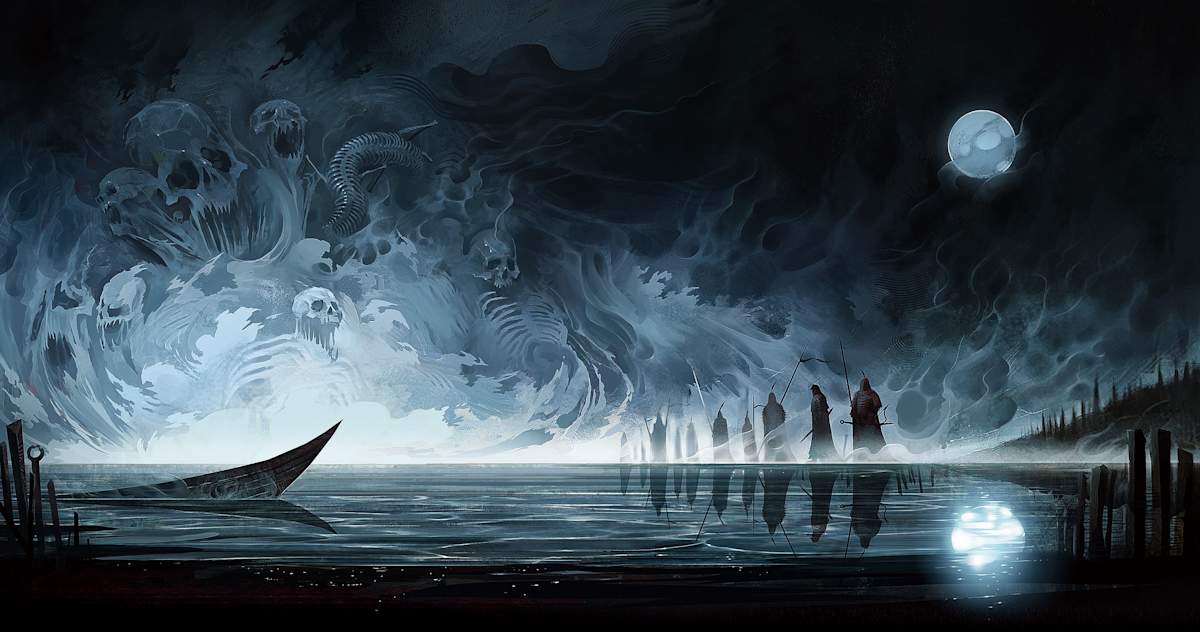
When worldbuilding for the supernatural, mythical elements, I wrote what felt right. It's cliché to say, but it's what works. While I meticulously spent countless hours on the maps, the majority of that time went to the mythical world that I built, not the locations on Earth. I'm someone who loves looking at maps in a book, but even I understand that it's beyond just saying where the locations are. Instead of using stock locations, you could consider it a rulebreaker element, where the way I make my locations memorable is by giving different details to the wilderness, the cities, etc. It's easy to make an Underworld where everything's on fire because it's been done countless times. Even just the Greek mythology interpretation of the Underworld is unique in its own right, despite its existing longer than the Judeo-Christian Underworld depictions. Basically, don't be afraid to branch out and make something your readers aren't expecting: it's what gives your book flavor!
In earlier blog posts, I explained that music inspired my writing style, specific lyrics. This sounds trivial, but it has been quintessential to the way I write. As well as if you're not copying the lyrics word for word (as that's copyright infringement), you can find something that speaks to you and find new, more interesting ways to describe it. Remember that songs usually have to follow a specific rhythm, note, or rhyme. You're not limited by that as a writer: the page is your oyster.
Side Tangent: One thing that makes life easier in general, not just writing, is celebrating the holiday of the time: paying close attention to what day it is. In a sense, it makes you feel more human. In the United States, Memorial Day and Mother's Day are in May (among others, but these are the two ones I see people actually pay attention to). There's a reason our ancestors came up with these celebratory traditions, and it's a part of our culture, even if many of the celebrations and holidays themselves feel like they're fading. Interestingly, holidays and cultures, they inspire locations and writing. My favorite holiday is Halloween, and it blew my mind when I was a kid and found out my best friend didn't celebrate it (I have since converted him to the dark side). There's something about the horror element and the supernatural, the unexpected, that makes Halloween what it is, and there's a reason we love it in my household. While some retail places might throw out their Christmas decorations as early as the beginning of September and start playing Christmas music on repeat to the dismay of their customers and employees, I like the rule of celebrating the mid-autumn season from late September to November 2nd. In Mexico, they celebrate Día de Muertos on the first two days of November, which I find to be a fascinating element of their culture. I wish we did in the United States. Instead, November 1st is a Christmas celebration, apparently. What happened to Thanksgiving?
Anyway, side tangent over, you get the idea. I find inspiration in dates, months, holidays, and even years. If we look historically, most people can name what they remember from years ago. Everyone remembers 2020 as the year the pandemic ravaged the Earth, and 1985 as the year of the release of Back to the Future. Two completely different elements, but they're both memorable, and they both made their impact. It's amazing how easy it is to forget that the pandemic even happened, that it was six years ago now. It set the precedent for this decade.
Essentially, settings are inspired by different parts of life. No matter where you go, what you experience, what you see? There's always something more to learn. I love studying cultures, languages, and how etymologies form. Beyond just writing, these are important pieces of knowledge in the real world. It's always good to learn something new and have it in your toolbox of knowledge, as nobody can take that away from you. Furthermore, writing and fiction mimic reality in mysterious ways, painting the ideas of the human soul onto the page. Even our most fictitious of characters are some of the most real. Isn't that fascinating? It's not about whether it's real or not; it's the concepts, and all in all, that's what it boils down to.
Happy Friday, everyone. I hope you enjoyed this blog post. Consider joining my mailing list if you did! I try to post every Friday (and have remained consistent so far) about what's on my mind during the writing process. Today was locations and worldbuilding, and especially the more creatively motivated people like myself love worldbuilding, even if it's from scratch.
Until we meet again, stay cool,
Dustin
May 8, 2026
#3: Memorable Locations