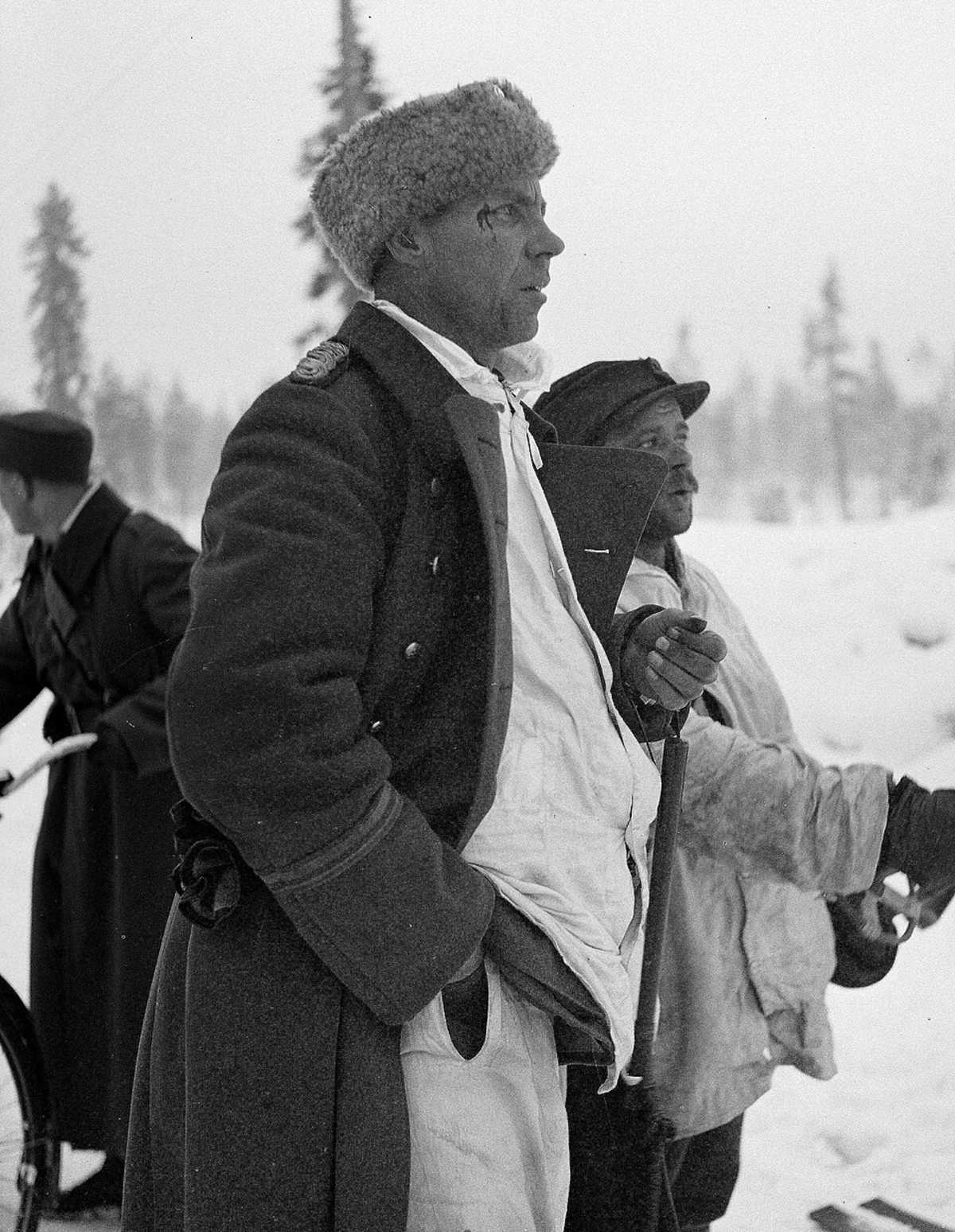
In 1939, tensions in Europe were at an all-time high. The German Reich invaded Poland, and just over two weeks later, the ever-looming Soviet Union jointly invaded from the east. By October, Germany and the Soviet Union had fully conquered Poland, which worried many countries in eastern and central Europe about their independence. While in the west the phoney war was happening, the Soviet Union started pushing into its smaller neighbors; influencing the Baltic states to let the Soviets establish military bases, only just to annex the Baltic states less than a year later. Finland was next on the chopping block.
Since Finland's independence on 1917.12.06, the new nation, formerly an autonomous zone in the Russian Empire, the Finnish military has been preparing for war against its eastern neighbor. An independent Finland was the dream of the people living there, and they were all living it. Though small in population, economic capability, and industrial power, Finland had an edge many in Europe did not consider at the time: who'd eventually become their most famous general, field marshall, and, to the Finns, their George Washington. Carl Gustaf Emil Mannerheim, a Finnish general of Swedish descent, served for nearly thirty years in the Russian Imperial Army, from a cavalry cadet to the rank of Lieutenant General. Generally successful against Austro-Hungarian forces, Mannerheim knew exactly how the Russians fought and had ideas in mind of how they might try to retake Finland.
The Soviet Union tried to negotiate to bring the border between itself and Finland further away from Leningrad (modern-day St. Petersburg), and demanding that, like the Baltics, they also have the rights to set up military bases in the Gulf of Finland on their territory. The Finns denied the Soviet Union because they knew the Soviets wouldn't stop at one demand. After all, everyone saw what happened to Czechoslovakia after the Munich Conference when a much more powerful nation demanded territory. After negotiations broke down, the Soviets prepared to take out Finland, despite the country's dedication to neutrality.
On November 30th, the Winter War began with Soviet soldiers crossing into Finland. The Soviets expected to destroy Finland before Stalin's birthday of that year, but one of the greatest underdog stories in world history followed. Finland, despite having worse technology, less of an air force, significantly fewer soldiers, and a lack of equipment, made one of the greatest stands in history. In a sense, this was Finland's war of independence against the Soviet Union, and the brave Finns weren't going down without a fight. They had Mannerheim; they had the full backing of everyone in the nation; and they had the winter as their friend against the Soviets.
Earlier, the Soviet Union engaged in the purges, which saw most of its commanding officers and other ministers that posed a threat to Stalin's rule to be 'removed'. The purges completed, and inexperienced generals crossed into Finland without the proper equipment. They wore large brown coats, didn't prepare for the -40 degrees that the Finnish winter would be, and often took pre-existing roads. The Finns often encircled Soviet soldiers and annihilated them in a series of what were called "Motti Tactics". One of the most famous battles of the entire war started on December 7th, the day after Finland's 22nd anniversary of independence: the Battle of Kollaa.
Commanding officer Major Woldemar Hägglund asked Lieutenant Aarne Juutilainen, "Will Kollaa hold?", to which Juutilainen replied, "Kolla will hold (Kollaa kestää), unless the orders are to run away." It's also in the Battle of Kollaa that the most prolific sniper in human history, Simo Häyhä, nicknamed "The White Death", got his famous 505+ confirmed kills during the Winter War. He saw his first battle in Kollaa, which, despite the Soviet bear being a terrifying monster, the Finns were successful in repelling the invasion in Kollaa. Finnish casualties reached 1,500 by March 13th, when the war ended, whereas the Soviets reached 8,000 in the same battle at the same time. Indeed, Lieutenant Juutilainen was right in asserting that Kollaa would hold.
Despite all the pressure the Finnish people suffered during the Winter War and immense international sympathy, the country survived at a cost. Having suffered 70,000 casualties (to the Soviet Union's 321,000-381,000) and losing 9% of its territory to the Soviet Union, the people living in the conquered territory were given the option to become Soviet citizens, or to move further west into Finland. Every single Finn denied citizenship of the Soviet Union and retreated further into their homeland. The heroes of the Winter War successfully warded off a Soviet invasion despite the odds being heavily against Finland. Even though Finland technically lost the Winter War, it was a pyrrhic victory for the Soviet Union at best.
Later, the Continuation War and the Lapland War eventually cemented Finland's long-wished neutrality and independence. They were one of three countries in Europe involved in WW2 without having their capital occupied (the other two being the Soviets and the United Kingdom), which is impressive to think about considering Finland only had about 3.7 million people at the time. Joseph Stalin even had respect for Carl Mannerheim and declared that the Finns owed their independence to him. Mannerheim was president of Finland at the end of the war and brought the country to peace. He was 72 when the Winter War started and led Finland militarily until he was 78, almost 79 years old. Despite his age and his vices of smoking and drinking, as well as his declining health, he efficiently ran the defenses of Finland, keeping to a daily schedule (like an ice-bath at 7 AM?!?), and didn't let his soldiers see him ungroomed or tired. He kept throughout the war when the people of Finland needed him, and thus he is considered the greatest Finn of all time.
Mannerheim alone is one of the most interesting men in history, and we could sit here talking about him for hours, but I will bring up only one more story. Though technically unsubstantiated, the story is likely true. Hitler paid a surprise visit to Mannerheim on his 75th birthday, on 1942.06.04. Hitler wanted to ensure that Finland would keep helping Germany against the Soviet Union during the Continuation War, and Mannerheim didn't like Hitler as a co-belligerent. Famously, Hitler had an aversion to smoking, and Mannerheim knew this about him. So, what does Mannerheim do in front of Hitler? He lights a cigar and begins smoking it in front of him. While everyone around him were appalled by his conduct and worried about what Hitler might do, Hitler didn't acknowledge the action. From this, Mannerheim knew Hitler was not in a position of strength, but weakness through his demands. He began the gradual transition that took over 2 years to get Finland out of the Continuation War before fighting Germany in the brief Lapland War. All in all, Mannerheim secured Finland as an independent state and so did every general beneath him.
So, if you ever feel stuck. If you feel like the whole world is against you and there's nothing you can do? There is. You can always do something about the situation you're in, just as the brave people of Finland fought tooth and nail to keep their country from falling under the red banner. You can always do more, be more, and you can always beat the odds if you do your absolute best. Never give up, no matter what.
Until we meet again,
Kollaa Kestää!
Dustin