While these questions seem overarching, they are legitimate questions to ask when creating a fantasy book. People can spend many years creating a fantasy world before they even write the first page of their book (as is true with other genres, but seems extra prevalent in this genre). Between maps, fictional races, fantasy politics, and the medieval stasis that most fantasy worlds have, fantasy as a genre is typically unchallenged and follows these same tropes. When an author writes a fantasy book whose cover doesn't stand out because it's in a sea of fantasy, they may have an excellent story, and you'd never know. The publishing world wants you to stick to a handful of genres that make sense, but that is the first major disbelief.
Hello everyone, and welcome back! In the plethora of topics, I've tried something different. Using an analytical mindset, I've analyzed the fantasy genre; one of my favorites. As an author, I've used low-fantasy elements in my book and, when I wrote it, I didn't even realize there was a specific subgenre called 'Sword & Sorcery', which is what I'd consider one of two primary genres of my debut (the other being hard science fiction). To sum it up for my gaming audience, Sword & Sorcery is essentially your hack and slash equivalent in books; so it's a natural gravitation for me as far as action goes. While I love fantasy and I think there are still many genres that work great, fantasy on its own is exceptionally difficult to supplement.
There's a level of complexity in writing multiple genres as well (and making them work, that's the most difficult part), yet there's a reason these generic stories rarely work for a book anymore. Maybe it's the society we live in, or the god-like technology that our society has. Nevertheless, there's no denying that part of the human condition, the human evolution, is stories. Every culture will have its own folklore, often having its own mythos. It's interesting to see why humanity, as separate tribes before civilization formed, thought of animism as a generic piece of their beliefs. Today in stories, our animism is the fantasy genre.
How many times have you walked into your local bookstore and walked into the fantasy section? There's a massive section of fantasy books, each unique, and yet the covers of these books have found a formula to indicate 'This is a fantasy book', which can inadvertently make it difficult to pick up. According to the economic principle of ‘supply and demand’, a vast readership fuels a substantial demand for fantasy literature, and numerous authors emerge to satisfy this need. It's not the genre itself that makes people stand out; it's the author. Many people will find an author they gravitate toward and go, "Wow, they did this genre so well" that it might be difficult for many people to pick up a book by a different author, especially if it's the same genre. Fantasy as a genre is a favorite among our society for a good reason, but because we're so conditioned to fantasy, we're not looking for the generics anymore.
J. R. R. Tolkien (LOTR, The Hobbit), Andrzej Sapkowski (The Witcher), Robert Jordan (The Wheel of Time), there's a reason we think of these authors in the fantasy genre. Other authors, like Stephen King, dabble in many genres. Take The Stand, for example; it's a book that takes place in a contemporary 1980/1990 (depending on the version of the book you read), and the book is about an evolved flu pandemic that kills most of humanity. In the end, the story transitions into a fantasy book, incorporating a few modern aspects. The introductions of the characters are quite lengthy, but overall I'd say that the ideas here, ranging from contemporary to apocalyptic to fantasy post-apocalyptic, rarely have the analysis to the depth that they should have. Another book series of his is the Dark Tower, in which it's a western-fantasy mix. These series stand out; not just because it's Stephen King, but because he actively challenges the established norm.
So, is challenging the norm the only way you can make a fantasy book stand out? Absolutely not! I think a lot about making a fantasy book stand out is the same way you make any book stand out; you don't focus on the genre itself. The genre is of tertiary importance to the characters and the story itself. For me, my quintessential focus as an author is around my characters, followed by the story, then the setting of what makes sense. The reason I have this mindset is that even if you have a mediocre storyline/plotline, your characters will make the book enjoyable for people to read. There seems to be a character archetype for everything, but that is not the case either. Plenty of different character archetypes remain untried, and you can create them. Even if you think someone has already tried it, chances are you’ll still do it differently because you’re a different author. These three-dimensional characters with layers of complexity are relatable on some depth, or they stand out; maybe they're cool or funny in their personality, maybe both? You can do anything as far as characters go. Genre itself does not limit character archetypes; thus, you have a creative way to express yourself even in traditional publishing.
Before I even started writing my first manuscript, I was huge into the MBTI and, to a lesser-degree, the Enneagrams and DnD alignment charts. There are 16 personality types measured on extraversion, intuitiveness, rationality, and structure. Now, that may sound restrictive regarding their Enneagram type, but surprisingly, it is not. There are patterns with the Enneagram, but every human on Earth is different. Ever tried an ESFP who's a Type 5 Enneagram? Go try it, see what quirky things your charming character can uncover despite not having the calculating personality that an INTJ might. Carl Jung proposed the idea of cognitive functions, and they switch around for every type. Nevertheless, before this becomes an MBTI slog, the alignment that comes in DnD is also important because it establishes how often a character might follow the rules/go their own way, or how good/evil they are. All three personality elements are never black and white; well-written characters will have traits all across the board that don't necessarily align with their 'personality type' because that's a regular human. It's the fundamental basis of being human; we're flawed, we make mistakes, and we're contradictory. Nobody is fully complete.
Someone I spend a lot of time with is very into astrology, and so if you're into that sort of thing, that could also be a basis as a writer for personality traits. If I were to go down this route, I'd treat it as a gray zone rather than black and white (like above). If you create a character based on an astrological chart, which heavily relates to birthdays/time of birth, you must either invent their birthday and time or use the day you created them as their ‘birthday’ because it is, in a way. This isn't something that I personally do and astrology isn't something I particularly spend much mental energy at all on, but I know other people will love astrological references; so this paragraph is for you.
If you prefer not to create characters from scratch, perhaps you'd like to base them on people you know. Maybe very specific elements of their personality into a character. Whatever works, right? Even if you go down this road, there's still creativity liberty to be had. Maybe you met an annoying coworker whom you didn't like, or you have a brother who likes to get a comedic rise out of people; that much is relatable since many people have one or two of those things. The list goes on for personality traits, people you've met, and basing a character’s personality in reality. In a sense, what makes fiction realistic could be the research into the topics of your world as if they were your own religion and you're their deity, but good fiction has a basis in reality. Write what you know; there's a reason our debut novels as authors typically have protagonists that are like us personality-wise. They're their own person, of course, but you may share those similarities in your personality.
Psychologically speaking, there's more than the internal differences to note. When we're born, where we're born, matters to our personality. If we're born in the 21st century to middle-class parents anywhere in the West, that'd differ greatly from being born in the 18th century to a wealthy landowner. Your life would be so much different; your view on the world would be so incredibly different, and as a writer, we have to imagine what our characters might be in any situation they may have grown up in. Ask yourself what events make the character. What breaks them? What causes them to become your main protagonist/antagonist of your novel? Why do they have that personality? Is it because of their family, or the people they're around?
Thanks for tuning in, and I hope you enjoyed this analysis! As for a book update, I am reviewing contracts with my business manager as we speak. Two distributors are potential candidates so far. If any authors are reading this and you have any suggestions, feel free to use the internal messaging function. If it's your first time here, why not join the mailing list? It's free, and you can unsubscribe anytime. I hope you enjoyed the post; I create a new one every Friday, and we'll see how we ramp up as my debut novel gets closer and closer to publication.
Until we meet again, stay cool in this July weather,
Dustin
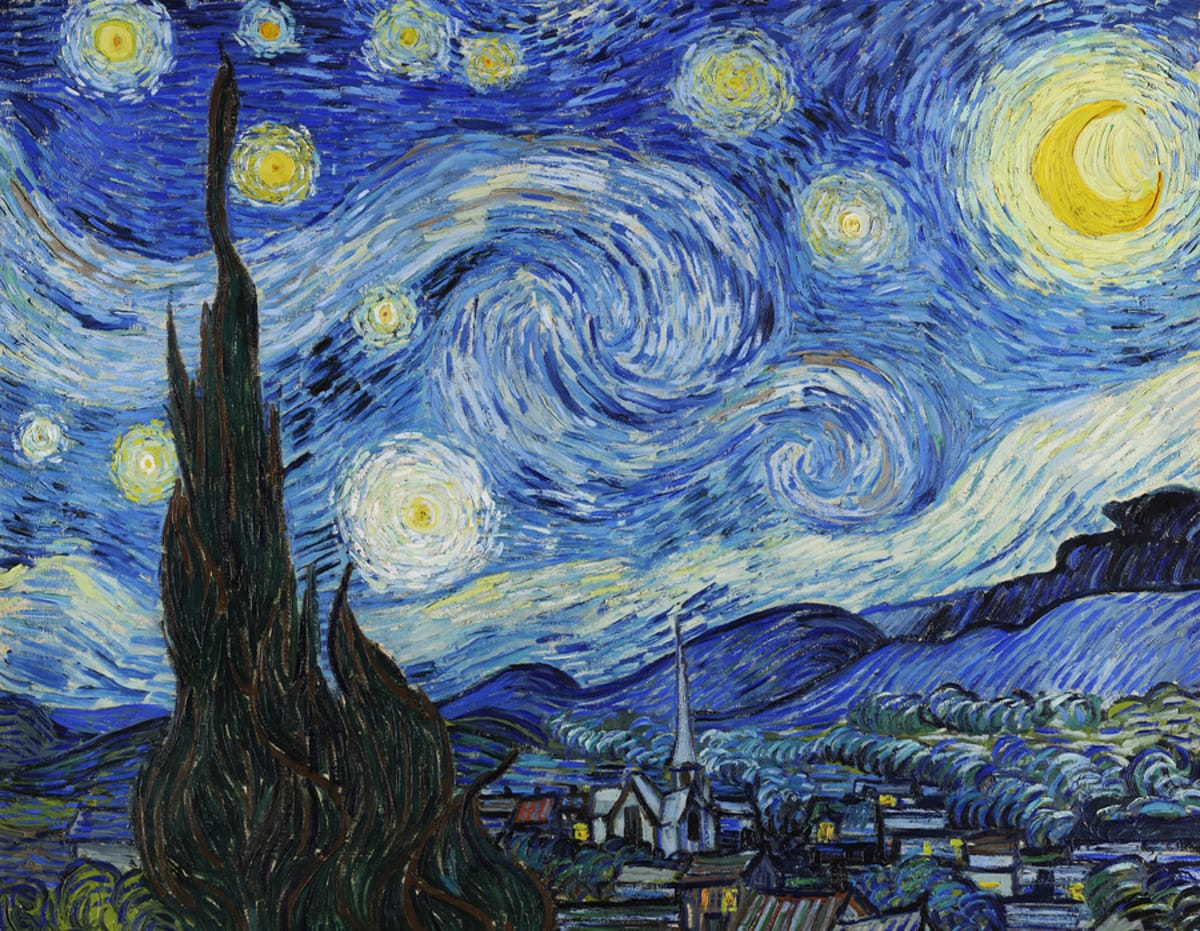
P.S. I had difficulty locating a suitable image that wasn't AI-generated, given the current prevalence of AI in fantasy on the internet. So, I chose Starry Night. Great classic, and we love Vincent van Gogh!